
Limited Time Offer Extended - Get $300 off when you book our upcoming retreat by November 27th with code: SACRED300. Terms apply!

Ayahuasca Ceremony Peru
Traditional Ayahuasca Ceremony in the Peruvian Amazon
Traditional Amazonian Practice at Banco Puma Sanctuary
Most people who begin searching for an Ayahuasca ceremony in Peru encounter a confusing landscape.
Retreat centers appear everywhere.
Promises of healing are made easily.
Yet very little is explained about how the work is actually carried.
Ayahuasca did not emerge from retreat centers.
It belongs to the medicinal traditions of the Amazon, where curanderos and their families have worked with the plants for generations.
Within those traditions the ceremony is not simply an experience offered to visitors. It is part of a living practice that includes preparation, diet, song, and the guidance of experienced healers.
At Banco Puma Sanctuary in the Peruvian Amazon, Ayahuasca ceremonies are held by the Acho family within the Lamista lineage.
This is not a retreat environment assembled for visitors.
It is the family ground where the curanderos live, where the medicine is prepared, and where the ceremonial work continues throughout the year.
People who arrive here are not entering something newly arranged for guests.
They are stepping into a place where the work was already alive long before retreat dates existed.
What an Ayahuasca Ceremony Actually Is
Ayahuasca is a medicinal brew prepared from the Banisteriopsis caapi vine together with companion plants of the Amazon forest.
In traditional practice the medicine is approached with discipline.
The ceremony itself is only one part of the work. Preparation, diet, and guidance from the curandero are equally important.
Ceremonies are usually held at night within a quiet and protected ceremonial space. Participants drink the medicine and sit within the structure of the ceremony while the curandero begins working through icaros, the traditional healing songs that guide the process.
These songs are not performance.
They are part of the medicinal structure of the ceremony.
The curandero uses them to direct the movement of the medicine, to support participants through moments of difficulty, and to guide the energetic work taking place during the night.
Each ceremony unfolds differently for each person.
Some encounter strong physical cleansing.
Others experience emotional release or psychological clarity.
The purpose of the ceremony is not stimulation or intensity.
It is to reveal what is misaligned and allow the process of cleansing and reorientation to begin.
The Role of the Curandero
In the Amazon the curandero is not simply someone who serves Ayahuasca.
The curandero prepares the brew, guides the ceremony through song, and works directly with the plants during the night.
This role is learned over many years through apprenticeship and disciplined practice.
Within the Lamista tradition this knowledge is often carried within families and passed through generations.
At Banco Puma Sanctuary this role is held by Maestro Don Rober Acho Jarama, who has worked with Ayahuasca for more than six decades.
He first drank the medicine as a child and began serving ceremony in his youth.
Today, at eighty years of age, he continues to hold ceremony alongside his wife Doña Eliana and their son Don Carlos.
When participants sit in ceremony here they are not meeting facilitators trained for retreat programs.
They are sitting with a family that has spent their lives inside this work.
Preparation Before Ceremony
Traditional Ayahuasca work places strong emphasis on preparation.
Participants follow a diet before the ceremony that reduces heavy foods, stimulants, and other influences that interfere with the clarity of the medicine.
This preparation helps stabilize the body and mind so the ceremony can unfold properly.
Approaching Ayahuasca without preparation often leads to confusion or unnecessary intensity.
Within traditional practice the diet and preparation are not optional. They are considered part of the medicine itself.
Preparation does not begin on the night of the ceremony.
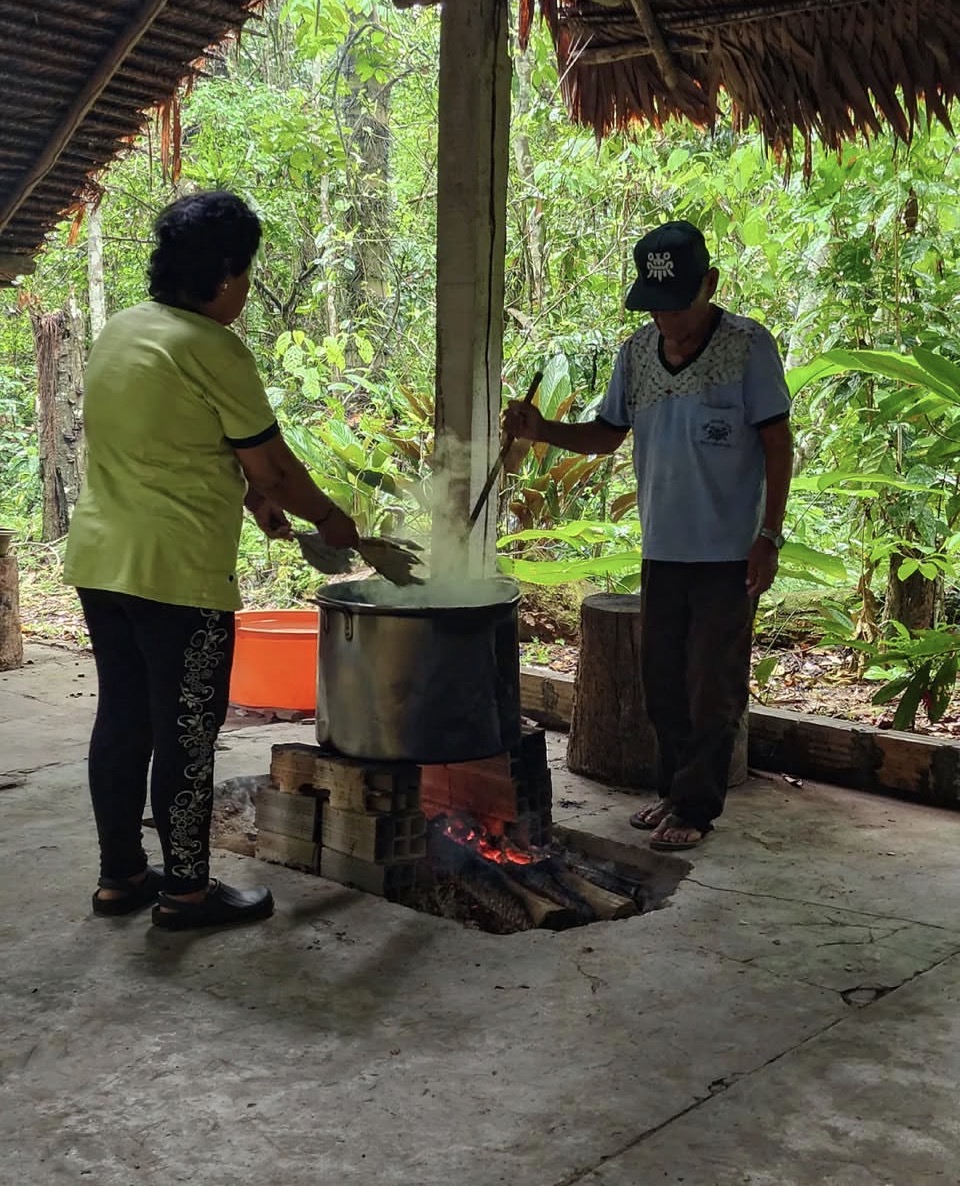
At Banco Puma Sanctuary participants also have the opportunity to witness how the medicine itself is prepared.
The Ayahuasca brew is cooked on the family ground using the traditional plants of the Amazon. During this process participants are able to observe the preparation, ask questions, and at times assist with parts of the work.
This is rarely seen in retreat environments, where the medicine is usually prepared out of sight.
Here the process remains open.
Participants are not separated from the work.
They are invited to understand it.
Choosing an Ayahuasca Ceremony in Peru
Many people searching for the best Ayahuasca retreat in Peru focus on visible features such as location, accommodation, or the number of ceremonies offered.
But the most important question is rarely discussed.
Who actually carries the medicine?
In the Amazon, Ayahuasca has always been guided by curanderos whose lives are dedicated to the plants and the discipline required to work with them.
When ceremonies are separated from that tradition, something essential is lost.
For this reason many experienced practitioners advise looking beyond marketing language and asking simpler questions.
Is the medicine prepared by the curanderos themselves?
Is the ceremony guided by people who have lived within the tradition?
Are the groups small enough for the work to remain personal and properly held?
At Banco Puma Sanctuary the ceremonies remain within the family ground of the Acho lineage.
The medicine is prepared on site.
Ceremonies are held in small groups so the work can remain steady and properly guided.
Participants are not moved through large retreat schedules.
They enter a process that unfolds step by step.
Why Ayahuasca Comes First
Within the ceremonial structure practiced at Banco Puma Sanctuary, Ayahuasca is approached as preparation.
The medicine clears what is no longer aligned and reveals the areas of life that require attention.
This cleansing phase opens the senses and allows deeper awareness to emerge.
Only after this preparation do we enter the Andean work with Huachuma, the cactus medicine of the Andes that stabilizes the process and supports integration.
Huachuma does not purge in the same way.
It stabilizes the insights revealed through Ayahuasca and supports integration.
Huachuma is also approached only after sufficient time has passed following the Ayahuasca ceremonies.
In traditional practice the two medicines are not served back to back.
A period of rest between them allows the body and mind to settle and ensures that the transition from the Amazonian work into the Andean work unfolds properly.
At Banco Puma Sanctuary the two phases are separated by several days so this transition can occur in a steady and grounded way.
This sequence reflects the traditional relationship between the Amazon and Andean medicines, a ceremonial structure where Ayahuasca prepares the ground and Huachuma teaches how to walk it.
The Amazon prepares.
The Andes instruct.
When both are approached correctly, the work unfolds in a way that is steady rather than overwhelming.
Participants are not chasing experiences.
They are guided through a process that continues to unfold long after the ceremonies end.
Working With Ayahuasca at Banco Puma Sanctuary
At Banco Puma Sanctuary, Ayahuasca ceremonies are held within the Lamista lineage by the Acho family.
The medicine is prepared in the traditional way using plants gathered from the surrounding forest and cooked over fire on the sanctuary grounds.
Participants are not separated from this process.
Those who come to work with the medicine are able to observe the preparation of the brew and see how the plants are handled before ceremony.
This reflects the way Ayahuasca has always been carried within the Amazon.
The ceremony is not something assembled for visitors.
It is part of a living practice that continues regardless of retreat schedules.
Participants step into the family ground where the work is already alive.
Meals, preparation, and integration all take place within this shared structure.
The intention is not to create an experience.
It is to hold the work carefully so that participants can move through the process in a grounded and supported way.
Those who feel called to approach Ayahuasca within this traditional context can view the upcoming retreat dates at Banco Puma Sanctuary.
Retreats are held in small ceremonial groups of six participants so the work remains personal, steady, and properly guided.
MAIN MENU


