
Limited Time Offer Extended - Get $300 off when you book our upcoming retreat by November 27th with code: SACRED300. Terms apply!

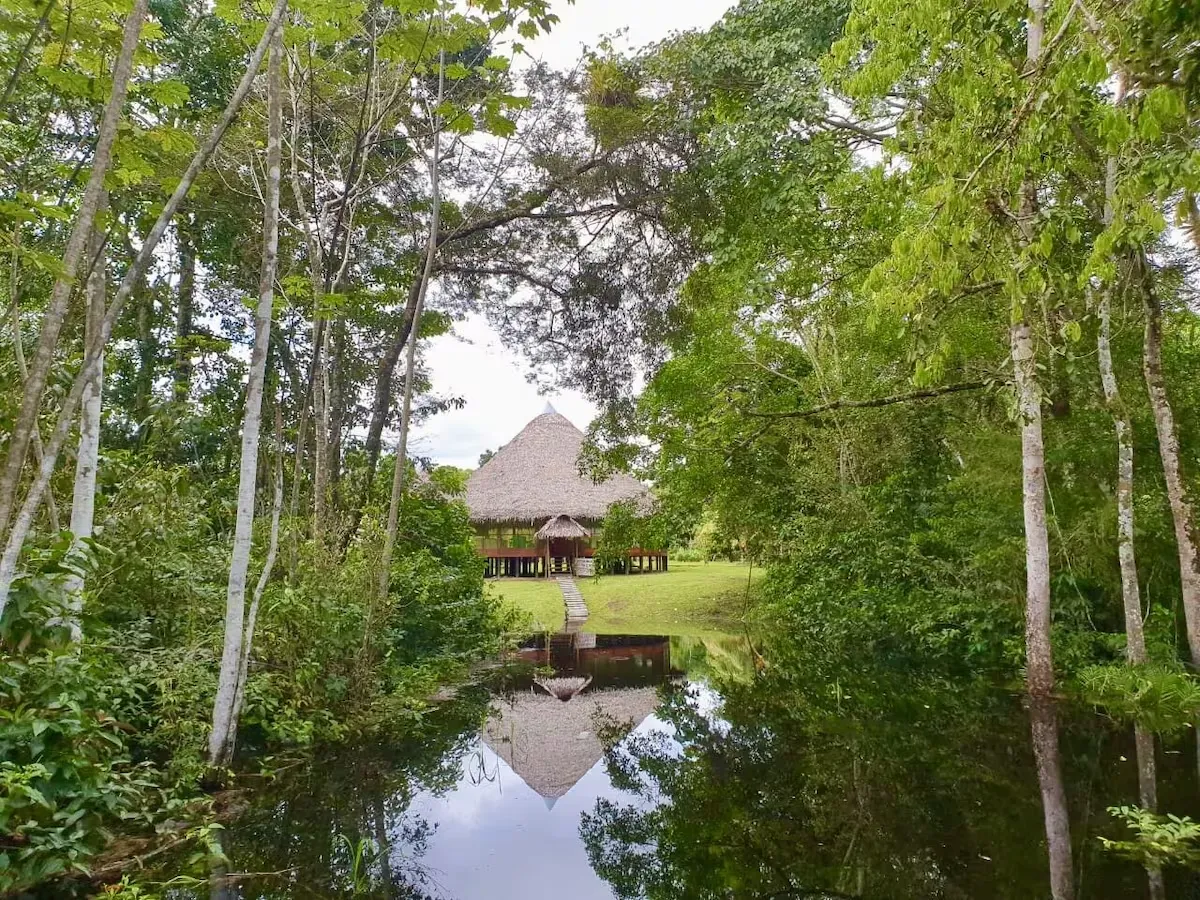
Best Ayahuasca Retreat Peru
How to Choose an Ayahuasca Retreat in Peru
People searching for an Ayahuasca retreat in Peru often encounter hundreds of options.
Retreat centers appear throughout the Amazon basin and across many regions of the country.
Programs vary widely in size, structure, and approach.
Some operate in small ceremonial groups guided by traditional curanderos. Others host large groups with modern retreat formats.
For someone approaching this work for the first time, the differences can be difficult to understand.
Choosing where to sit with Ayahuasca is not simply a matter of location or accommodation.
Understanding how a traditional Ayahuasca ceremony in Peru is actually carried is often where clarity begins.
The most important factors are often less visible.
Below are several elements experienced practitioners often recommend considering before choosing a retreat.
Who Carries the Medicine
Within traditional Amazonian practice Ayahuasca ceremonies are guided by curanderos.
These are healers who have spent many years learning to work with the plants through disciplined apprenticeship and practice.
The curandero prepares the medicine, guides the ceremony through icaros, and works with participants throughout the night.
Some retreat centers operate primarily with facilitators who assist participants but are not curanderos themselves.
Understanding who prepares the medicine and who actually holds the ceremony is often one of the most important questions to ask.
Many experienced practitioners advise choosing environments where the medicine remains in the hands of those who have spent their lives working with it.
Size of the Ceremony
Another important factor is the size of the ceremonial group.
Some retreat programs host twenty or more participants per ceremony.
Others maintain smaller groups so the curandero can work closely with each person.
Ayahuasca ceremonies can be physically and emotionally demanding.
Smaller groups often allow the ceremonial work to remain more personal and carefully guided.
Preparation Before Ceremony
In traditional Amazonian practice the ceremony itself is only one part of the process.
Preparation before the retreat is considered equally important.
Participants are often asked to follow dietary guidelines that reduce stimulants, alcohol, heavy foods, and other influences that may interfere with the clarity of the medicine.
This preparation helps stabilize the body and mind so the ceremony can unfold more smoothly.
Retreats that place emphasis on preparation and guidance often create a more grounded environment for the work.
For those unfamiliar with how preparation fits into the broader ceremonial structure, it helps to understand how Ayahuasca is traditionally worked with in Peru.
Integration After the Ceremony
The effects of Ayahuasca do not end when the ceremony finishes.
Insights and emotional shifts often continue to unfold for weeks or months afterward.
For this reason many practitioners emphasize the importance of integration.
Integration may include time for reflection, discussion, and support as participants begin to apply what they experienced during ceremony.
Retreat structures that allow space for integration often help participants navigate the process more clearly.
In some traditional paths, this process continues beyond Ayahuasca itself, moving into Andean work with Huachuma, which supports integration in a different way.
The Role of Tradition
Ayahuasca belongs to living traditions of the Amazon rainforest.
The medicine has been carried for generations by curanderos who work within specific cultural and ceremonial frameworks.
Some retreat centers attempt to recreate these traditions for visitors.
Others operate directly within communities where the work has always been practiced.
Understanding the lineage behind the ceremony can help participants approach the medicine with greater respect and clarity.
It also helps clarify how different traditions relate to each other, particularly when both Amazonian and Andean medicines are approached within a coherent structure.
A Different Approach
At Banco Puma Sanctuary the Ayahuasca ceremonies are held within the family ground of the Acho lineage in the Peruvian Amazon.
The medicine is prepared on site and the ceremonies are guided by Maestro Don Rober Acho Jarama alongside his family.
Groups remain small so the work can be carried carefully and each participant can receive proper attention.
Participants also have the opportunity to observe how the Ayahuasca brew itself is prepared, something rarely seen in modern retreat environments.
The intention is not to create spectacle around the medicine but to maintain the ceremonial structure through which the work has traditionally been carried.
This is not a retreat model built around volume. It is a structure built to hold the work properly.
Those who want to understand how Ayahuasca is actually carried within a traditional setting can read more about the structure of traditional Ayahuasca ceremonies in Peru.
Participants who feel called to approach the work directly can view the upcoming retreat dates held at Banco Puma Sanctuary.
Retreats are held in small ceremonial groups so the work remains personal, steady, and properly guided.
For those who have been looking for a place where the work is carried this way, the next step is simply to see the available retreat dates.
STILL NOT SURE?
Common Questions About Ayahuasca Retreats in Peru
Question 1: How do I choose the right Ayahuasca retreat in Peru?
Choosing a retreat is not about finding the most comfortable location or the most intensive schedule.
What matters most is who carries the medicine, how the ceremonies are structured, and whether the work is held within a living tradition.
In the Amazon, Ayahuasca has always been guided by curanderos who have spent years developing the capacity to work with the plants.
Approaching the work within that structure tends to provide a more grounded and coherent experience.
Question 2: What is the difference between a curandero and a facilitator?
Within traditional practice there is no role equivalent to what is now often called a facilitator.
Ayahuasca ceremonies are guided by curanderos, also known as ayahuasqueros, who prepare the medicine, hold the ceremony, and work directly with participants through the night.
The role of facilitator has emerged more recently within modern retreat environments and does not exist within traditional curanderismo.
Understanding who actually carries the medicine is an important part of choosing where to sit.
Question 3: Are smaller ceremony groups better than larger ones?
Ceremony size affects how the work is held.
Larger groups can make it difficult for the curandero to work closely with each participant.
Smaller groups often allow for more direct attention and a steadier environment.
Rather than focusing on quantity of ceremonies, many experienced practitioners recommend looking at how the work is carried and whether the structure allows proper guidance.
Question 4: Is preparation required before attending an Ayahuasca retreat?
Traditional practice places strong emphasis on preparation. Participants are often asked to follow dietary guidelines and avoid substances that may interfere with the clarity of the medicine.
Question 5: Is it safe to combine different plant medicines within the same retreat?
In traditional practice different medicines are approached within their own ceremonial structures and are not combined casually.
Each medicine has its own process, preparation, and integration period.
Rushing between different practices or combining multiple medicines without proper spacing can create confusion and unnecessary strain on the body and mind.
For this reason many traditional practitioners keep the work structured and sequenced rather than mixed.
Question 6: Do Ayahuasca retreats screen for medications and medical conditions?
Responsible retreat environments take medications and medical conditions seriously.
Ayahuasca interacts with a range of substances, including certain antidepressants and other medications.
Participants are usually asked to provide information about their health and current medications before being accepted.
Careful screening is an important part of ensuring the work can be approached safely.
Question 7: Should I speak with the retreat before committing?
Speaking directly with the people who hold the retreat can provide clarity that is not always visible on a website.
It allows you to understand how the work is structured, ask practical questions, and get a sense of whether the approach feels aligned.
For many people this conversation becomes an important step before making a decision.
Question 8: Is Ayahuasca a “love and light” experience?
Ayahuasca is often presented in simplified or idealized ways, but the work itself is not based on comfort or constant positive experiences.
The medicine can bring clarity by revealing what is unresolved, misaligned, or avoided.
At times this can be challenging.
In recent years some approaches have framed this work in a way that emphasizes only uplifting or “love and light” experiences.
This can create unrealistic expectations and lead people to underestimate the depth of the process.
Traditional curanderismo approaches this work with the same seriousness found in other forms of medicine.
It is not based on promises or language designed to persuade.
It is based on structure, discipline, and the capacity to hold the process when it becomes difficult.
For this reason it is important to approach the work with discernment rather than relying on surface-level messaging.
A grounded environment, clear guidance, and experienced practitioners are essential.
MAIN MENU


